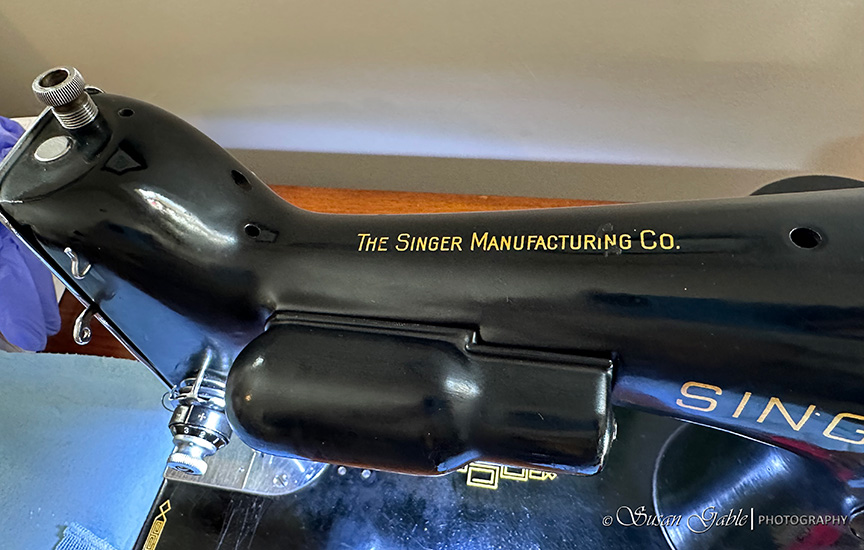
Call me a bit anxious and excited. I decided to dive in and start cleaning and polishing my Singer 201-2.
I grabbed my q-tips, shop towels, and micro-fiber towels. I also had cut up old cotton t-shirts and round cotton pads ready to use, but ended up not using them at all.
I applied a polishing compound to the q-tips for the external areas that were hard to reach as well as the nooks and crannies on the bakelite body of my machine. Then I took the micro-fiber towel and gave it a good buffing by using and up and down as well as side to side movements. For the bigger main areas I used a shop towel and applied the compound to the bakelite (black painted) areas of my machine and followed up with a good buffing with the micro-fiber towel.
I knew there would be areas that would need extra attention like the bed area where for years fabric and pins have moved across this sewing area. There are plenty of scratches. Plenty of wear and tear.
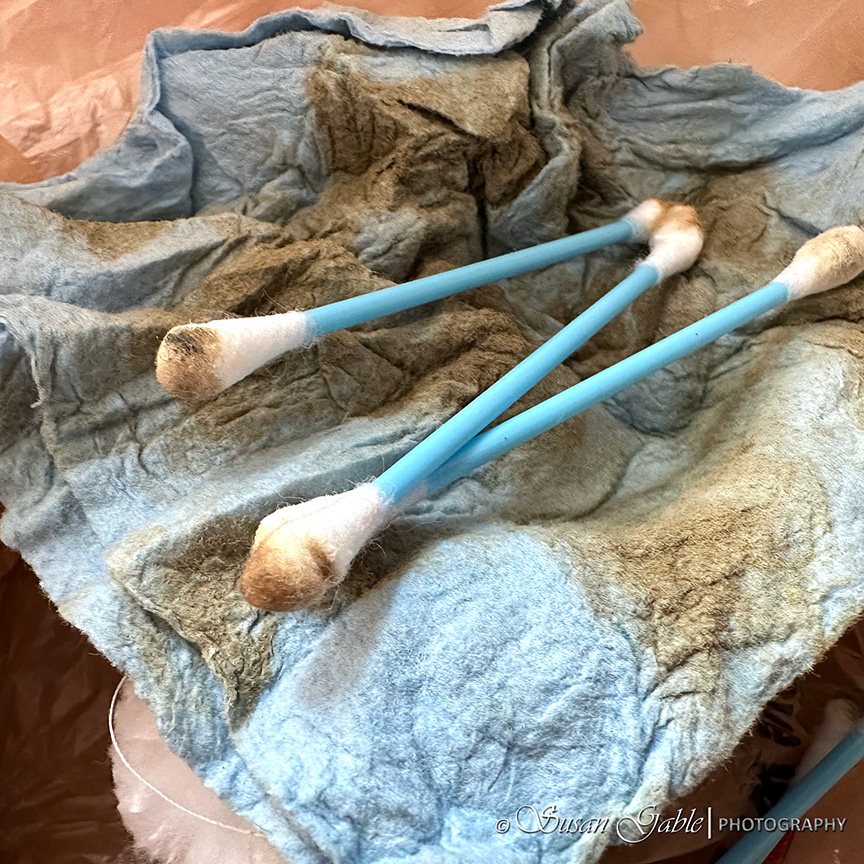
I knew it when I heard squeaky noises coming from my towels that those areas still had good clear coat coverage. Areas that did not make any noise were more than likely damaged or rough areas that were no longer protected.
Here’s what the machine looked like before:
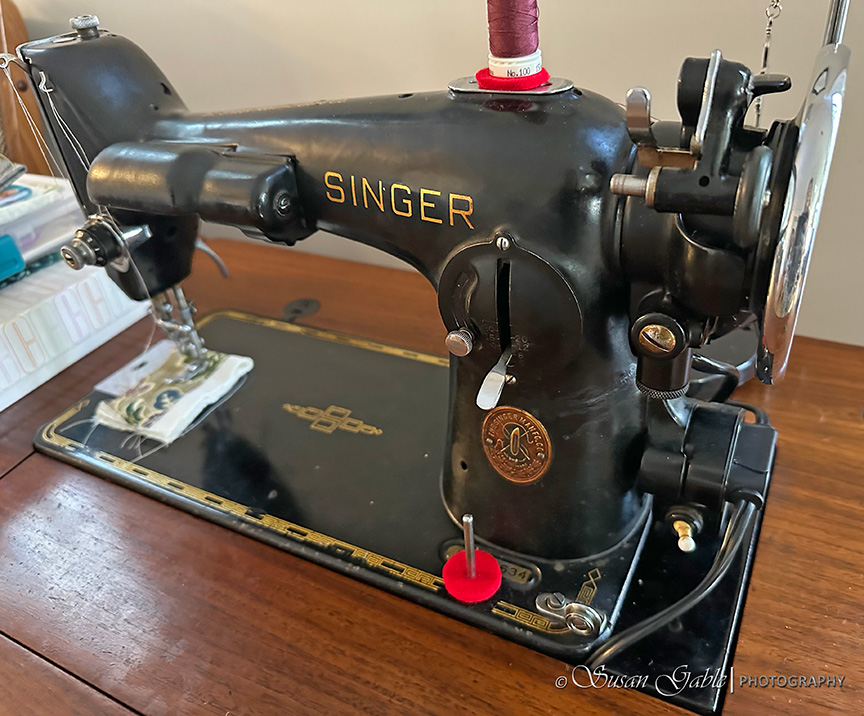
Here’s what my machine looks like after the first round of just using the polishing compound:
The Singer name and logos are shining up nicely.
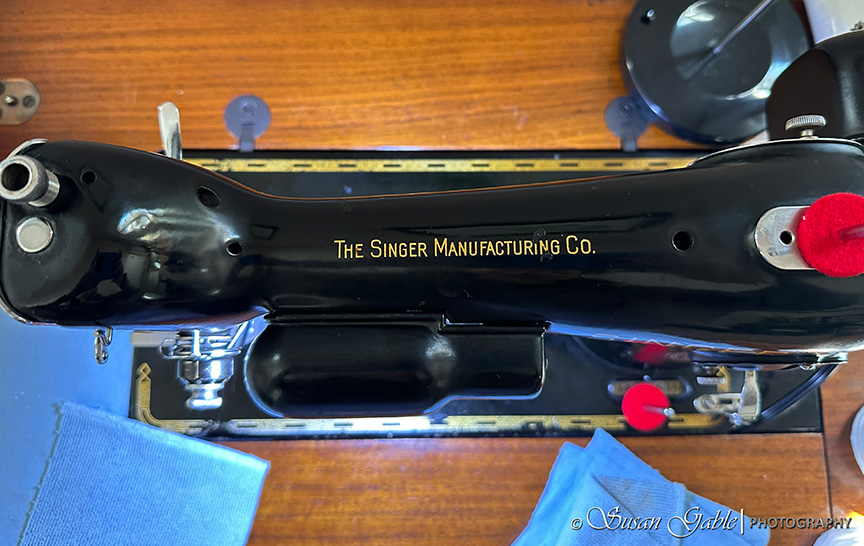
Problem areas took a few rounds of cleaning with this polish. Like the bed of the machine.
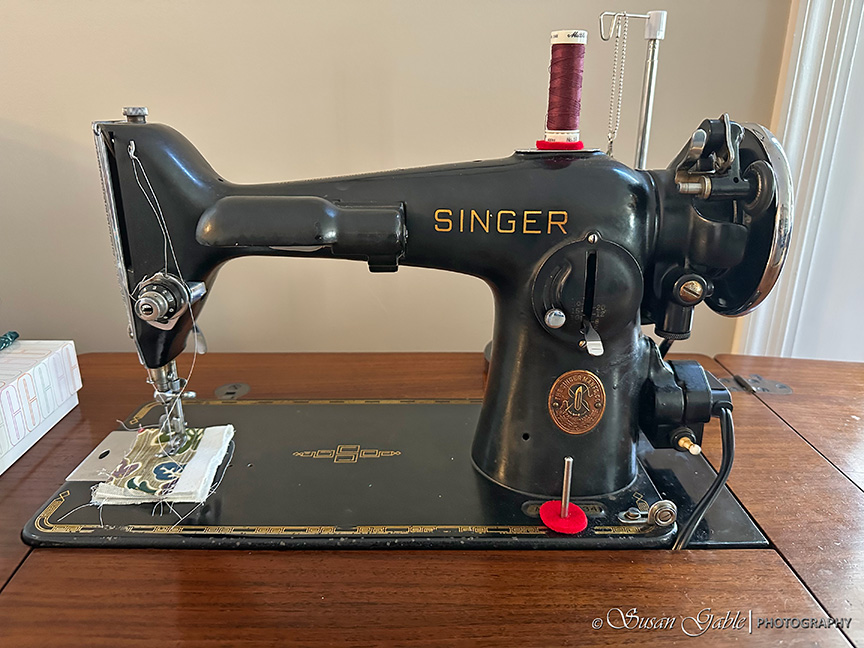
Here’s another look of my 201 before:
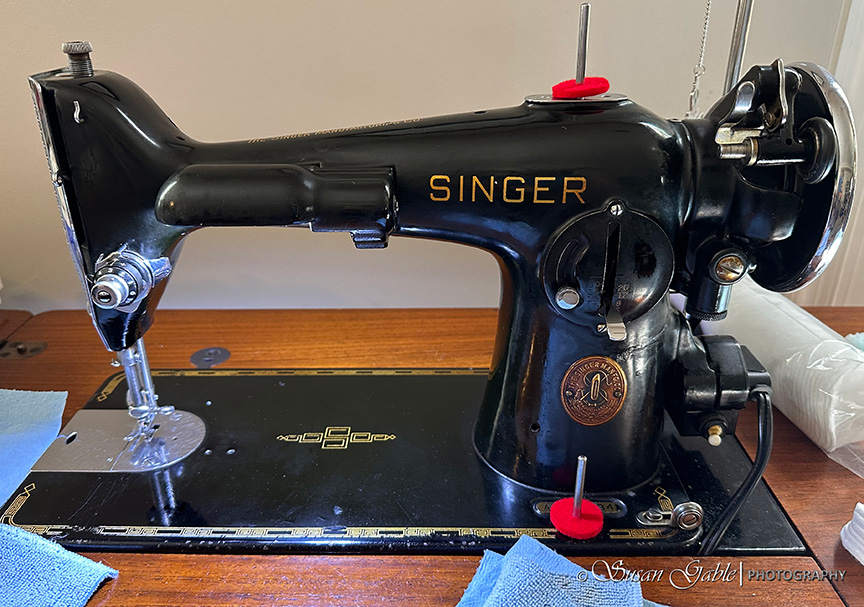
Another look after the initial cleaning:
I remembered from cleaning my Featherweight, to start from the left and work my way towards the right side of my 201 machine. Using the polishing compound took a bit of time as I had to maneuver around my machine’s components. I decided not to take apart my machine since it’s sewing beautifully.
I have to admit, cleaning my Featherweight was a lot easier as I had removed most of the knobs, dials, and wheel. Stuff that got in the way of cleaning. It was easier to apply the wax and use a bit of elbow grease without having to worry about running into the tension dial or hitting my hand on the wheel.
One day when I have more time, I will take apart my machine and give my 201 a good cleaning around the bits and bobs.
I think I will take another spin with this polishing compound on my machine. Until my polishing cloths come out clean.
I decided to use the cleaning compound first and get all the areas I could reach before I used a final wax. I can’t wait to see what it will look like after using a separate cleaner wax. More on that later.
Polish: TurtleWax Polishing Compound 18oz. A polishing formula that removes light to medium scratches and imperfections. This is a car polish. Your mileage may vary with this product. I think it did a great job on my 88 year old sewing machine. This was recommended by the “Sewing Machine Rehab” channel on YouTube. I highly recommend watching/researching this channel for wonderful tips on taking apart vintage Singer sewing machines. Also cleaning and maintaining them. Lots of useful information and tips.
Cleaning items that worked well: Q-tips, blue shop towels, and micro-fiber towels. A lot of Q-tips will be used in the cleaning process. I cut up the towels (shop & micro-fiber) into smaller and manageable sizes to be able to buff out the nooks and crannies of the machine. It’s just easier to manage the smaller sized towels.




 SusieG Studio
Leave a comment